What changed
Finding the news, reading it and the first draft are done before anyone starts work. The team opens Slack and finds topics ready for a decision.
I’m Dimitris. With 14 years in software, I map, organise and automate the processes of your business.
For companies of 20–200 people and for agencies. The audit is paid, at a fixed fee.
Expense of €1,840 is waiting for approval from the finance director
Human decision

 Gmail
 Google Sheets
 Excel
 Outlook
 Slack
 Teams
 Zoom
 Viber

 HubSpot
 Shopify
 WooCommerce
 Airtable
 Notion
 n8n
 OpenAI


Tick what you recognise. On the right you see how it would run, and the list goes with you to the form.
queue: empty. The day is starting.
SampleWholesale distribution, 60 people · 16 Oct 2026, 08:00–12:30 · from the execution log
By the end of the morning shift, 38 tasks have completed automatically, 3 went through a person and 0 entries were made by hand. One expense of 1,840 euros is waiting for approval.
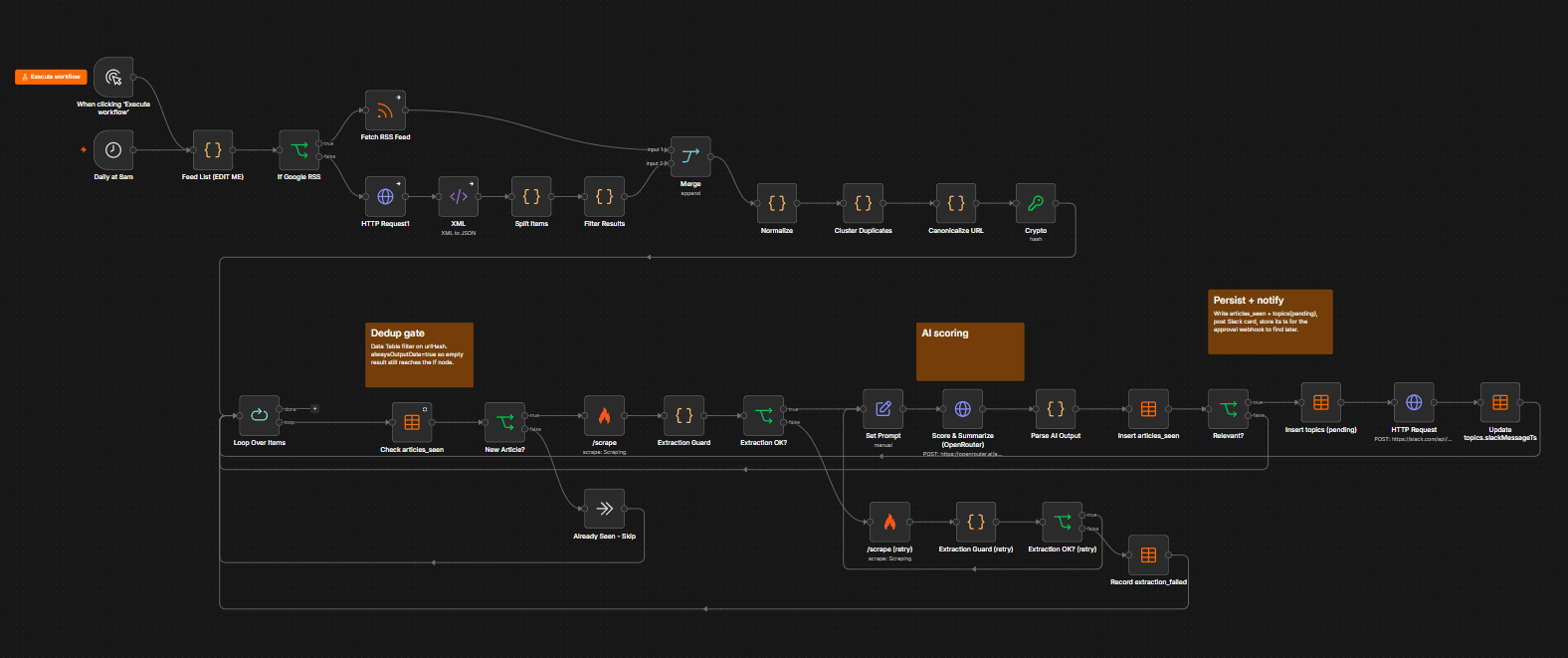
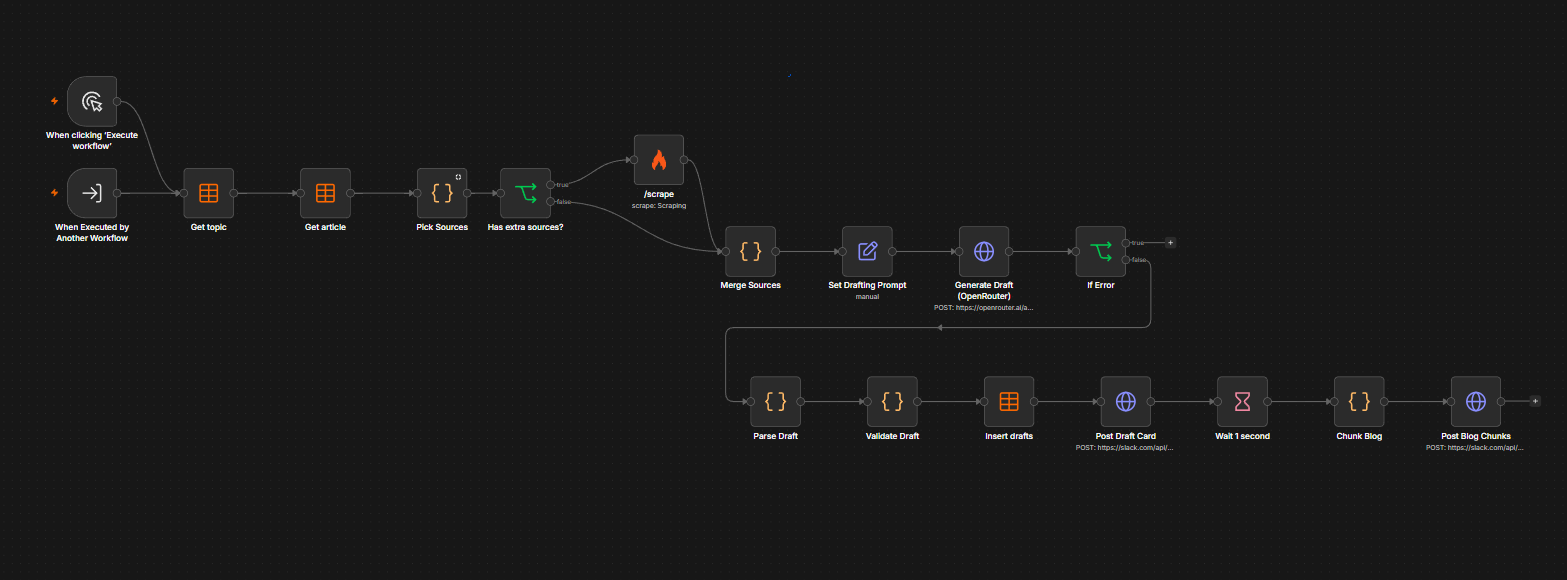
A Greek security systems company. They wanted to write regularly about their market, without someone hunting for news and writing from zero. The system reads, proposes topics to the team inside Slack, and writes a draft only for the ones they approve.
BeforeHuman time: about 4 hours per piece
AfterHuman time: about 15 minutes per piece, for approval and a final check
Human time per piece:about 4 hours → about 15 minutes
news items a month are read and scored
monthly average, since Sep 2026topics a month are proposed to the team
monthly average, since Sep 2026ready drafts a month, post and article
monthly average, since Sep 2026of runs without an error
last 30 daysFinding the news, reading it and the first draft are done before anyone starts work. The team opens Slack and finds topics ready for a decision.
Which topic is worth it and what finally gets published. The team rejects more than half of the topics it reviews. That filter stays with a person on purpose.
Another case · 3CO, Netherlands
3CO offers hair loss treatment on a monthly subscription. Behind the site sits an Airtable back office: payments, reminders, invoicing, upsells, abandoned carts and statistics all run automatically. The company’s partners manage the leads and orders assigned to them on their own.
Webflow · Memberstack · Stripe · Airtable
Visit 3co.nlcustomers served
back-office automations, plus a portal for partners
a week no longer spent on payments and invoices
invoices issued by hand
I don’t start from the tool. I start from the process, and if something isn’t worth automating, I’ll tell you.
Mapping
I talk to the people who do the work and map how it runs today: who does what, in which tool, how often.
DeliverableA map of the process as it is actually run
Organising
What is worth automating, what is not, and in which order. With a fixed scope and a fixed price, no fine print.
DeliverableA proposal with scope, timeline and price
Automating
I build what we agreed, on the tools you already have, and we test it with real data before handover.
DeliverableLive flows, documentation, team training
Support · optional
I watch every run, fix whatever breaks and adjust the flows when your work changes.
DeliverableAn alert on every failure, changes within the month
The audit doesn’t commit you to the build. The proposal is yours, even if you don’t go ahead with me.
Request an auditMost companies start with the audit. If you are a smaller team or an agency, there is a shorter route.
The route I describe above. You start with a paid, fixed-fee audit and decide on the build once you have the written proposal in hand. For teams with many processes, many tools and no documentation.
No audit and no big project. I set up one tested automation on your tools. The first is the Quote Engine: you say or write what the customer wants, and a costed quote comes out as a PDF.
Ask about the Quote EngineI take on the automation part of your projects. You keep the client relationship, I build, document and deliver.
Talk to me about working together
I’m Dimitris Vlachakis. I’ve been writing software for 14 years, and today I use it for one thing: taking repetitive work off teams.
DV Works is a one-person studio. I do the audit myself, write the proposal, build the flows and pick up the phone when something goes wrong. There is no account manager in between. It also means I take on only a few projects at a time.
The questions I hear most often on the first call. If yours is missing, write to me.
You do. They run in your own accounts or on a server you control, with documentation and access for your team. If we stop working together, they keep running as normal.
Every flow I deliver sends an alert when it fails, with the step and the reason. With monthly support, I fix it. Without it, the documentation tells your team what to check first.
Usually not. I connect the ones you already have. If one does not allow a connection, you will see it written in the audit, before you decide anything about the build.
No. I need someone who knows the process well and can give me a little time each week while we build. At the end I train the people who will work with the flows.
Only where it does something specific: sorting email, extracting data from invoices, a first draft. Most steps in a flow are plain rules, and the decisions stay with people.
It stays in your systems wherever possible. Where a flow sends something to a language model, I tell you exactly what it sends and where, and for sensitive data we avoid it.
The audit has a fixed fee that you know before we start. The build has a fixed price per project, set after the audit, once we know exactly what is being built.
Yes. The audit is mostly done by video call with a shared screen. For companies in Athens I can also come in person.
Two lines are enough. I will reply myself, not with an automatic email.
Or write to me directly at dimitrisvlh@gmail.com